Bunion Surgery Recovery Tips Week by Week
Bunion Surgery
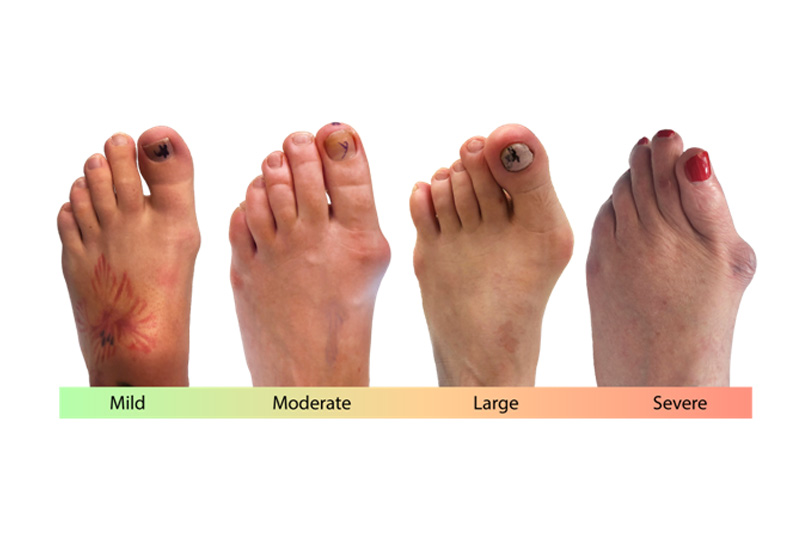
A Bunion is a common foot deformity that manifests as a bony growth below the base of the big toe. A Bunion is progressive, meaning it will get worse over time; the Bunion ‘bump’ will enlarge and often causes footwear fitting issues, pain, swelling and can prevent day-to-day activities. We have previously written some detailed information about Bunions and how to recognise them.
Surgical correction of Bunions tend to be considered a last resort when more conservative treatment measures fail to resolve the symptoms. This is partly because, like most types of surgery, it requires a recovery period and patients are often concerned this will be disruptive. However, in recent years Bunion surgery techniques have improved, greatly reducing the impact and length of recovery from an operation.
Recovery for bunion surgery
The recovery will vary depending on the type of procedure that is advised, although they often share many characteristics and stages, including:
- Physical therapy: this is an important part of the recovery process to make sure healing and the return to activity is optimal. Usually this will begin at around two weeks after surgery.
- Post operative shoes: all patient will wear protective shoes and slowly transition back to normal footwear.
- Swelling: will reduce over time and be much improved from 6 weeks.
Below is some key information on these and other aspects of the recovery.
Bunion surgery recovery time
Recovery times following Bunion surgery can vary, depending on a number of factors:
- General health: older patients or have generalised health conditions, like diabetes, may need a longer period to fully heal.
- Type of procedure: the less invasive the procedure the faster and less impactful the recovery. For example, with Minimally Invasive Bunion Surgery it is possible to walk straight away, albeit with less activity and some reasonable supports during the appropriate stages. However, Minimally Invasive Procedures are not always appropriate.
- Other surgeries: if operations for other deformities are conducted at the same time, this may impact the overall recovery period.
Bunion Surgery Recovery Week by Week UK
However, for the most common types of operation and assuming normal levels of health, the recovery times broadly follow the below pattern:
- The first 2-4 days | You should rest as much as possible with your feet up over this period; restricting movement to using the bathroom. Generally all movement will make use of some kind of support, such as crutches.
- 2 weeks after surgery | Bandages will likely no longer be needed. Many patients return to trainers and may start with physiotherapy at this point.
- 2-6 weeks after surgery | Patients often return to work during this period. You can return to driving on the condition that you can perform an emergency stop. Virtually all normal activities are possible at this point.
- 6-12 weeks after surgery | Sports and other shoe types can be returned to over this period.
- 6 months after surgery | You will normally have a final review around this period. By his point you should have the full benefit of the surgery.
A particular recovery pathway may differ from the above in some respects and your surgeon will always be able to advise what to expect in a more specific case.
Bunion Surgery Recovery Tips By Mr. Kaser Nazir (Consultant Podiatric Surgeon)
Recovery shoes
Normally patients will make use of a postoperative shoe over the first two weeks postoperatively. These look like slightly oversized sandals that redistribute pressure away from the surgery site when moving, as well as protect the area from knocks.
Sometimes, if a swift return to work is important, patients may make use of an aircast boot, which provides added protection
as well as control of swelling.
Bunion surgery recovery exercises
It is important to maintain strength after a period of limited activity, as well as to relieve pain. The recovery will involve both strengthening and stretching exercises.
Strength: these will be targeted exercises to gradually improve strength of the muscles that support your foot and lower limbs. This will help keep your joints stable, as well as relieve some foot and ankle pains that are caused by weakness.
Stretching: Improving flexibility of your lower limb muscles can help restore the range of motion of your foot & ankle, as well as reduce muscle soreness.
A physiotherapist will aid and guide patients through this process.
Bunion surgery – before and after
What to expect
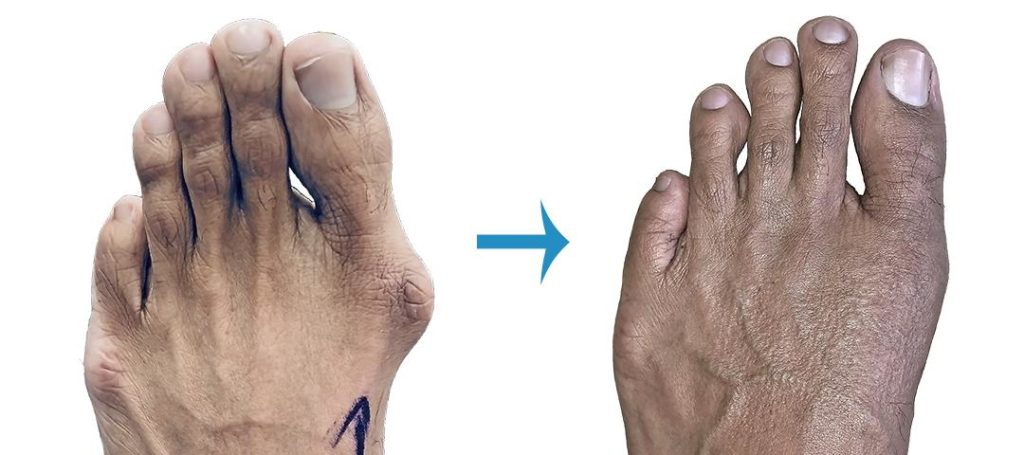
Click here to see more Before and After Surgery Images
When to contact a doctor during recovery
Your surgeon will warn you of any signs to watch out for and how to act should there be any concerns during a recovery. It is important to seek specialist advice or revert to your surgeon if you notice any of the following:
- Excessive low limb swelling,
which could indicate a DVT - Allergic reaction to anesthesia
- Infection, indicated by pus,
pain, increased temperature and swelling - Pain controls, such as
medication, are not working
FAQs
Red meat, alcohol, and dairy products may worsen bunion symptoms.
Supplements such as bromelain, devil’s claw, and turmeric may help
reduce inflammation when taken internally.
Around six weeks after surgery, pain and swelling gradually reduce.
Mild discomfort and swelling may persist for six months to a year.
A cast or special postoperative shoe is usually required for 3–6 weeks
to protect and correctly position the toe.
- Avoid putting weight on your big toe
- Elevate your foot to reduce swelling
- Keep wounds and bandages dry
- Take pain medication as prescribed
You may need to avoid driving for at least a week or longer.
Physical therapy or exercises may be recommended to restore strength
and motion. High heels should be avoided for at least six months
following surgery.
Sleeping on your side is generally safe if you place a pillow between
your knees for support. Other sleeping positions are not recommended
as they may twist the legs and risk dislocation.
Normal walking is usually not possible for at least eight weeks.
Mild discomfort and limited toe movement can last longer.
Regular shoes may be difficult to wear for 8–16 weeks depending on swelling.
Stitches are usually removed around this time. Elevation is still advised,
and compression stockings can help reduce swelling while increasing activity.
Applying ice for 20–30 minutes two to three times daily is also beneficial.
Initial recovery takes around six weeks. During the first two weeks,
walking should be minimal and focused on protecting the surgical site.
Leather shoes are recommended as they are soft, breathable, flexible,
and durable. Soft footwear helps prevent rubbing over the big toe joint
and improves comfort during recovery.
Find Out More
If you have any other questions or would like to reserve an appointment at our practice, don’t hesitate to get in touch with our team: