Hammer Toe Surgery
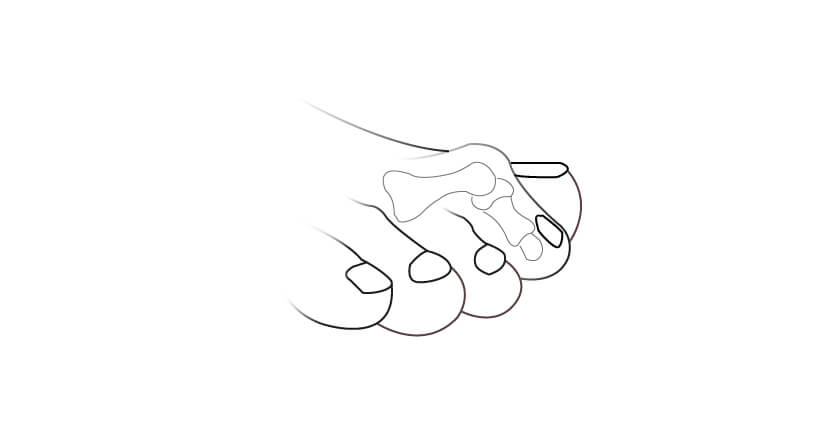
What are Hammer Toes and why do they develop?
A toe is described as ‘Hammered’ when it becomes permanently bent at the first joint. This is due to a muscle imbalance; the toe is normally straight due to the equal forces of the surrounding muscles and tendons, but when the muscles become weak the tendons can pull the toe out of shape.What does a Hammer Toe look like?
A Hammer Toe is quite distinctive when compared to a toe with natural alignment. Though they can be more or less severely bent: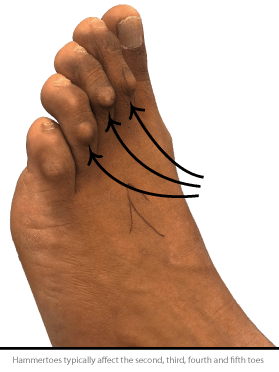
Treatment for Hammer Toe
Hammer Toes can cause a range of problems, including problems fitting into footwear and corns / callus that result from rubbing against footwear, which can cause painful symptoms. The pain and footwear issues can often be treated without surgery , though surgery can be used to correct the underlying issue.

When is Hammer Toe surgery recommended?
If the Hammer Toe symptoms do not resolve with more conservative measures then your specialist may recommend surgery to permanently resolve the issue.What are the alternatives to Hammer Toe surgery?
Non-surgical treatment of Hammer Toes typically aims to address the symptoms rather than correct the bent toe. These might include:- Orthotics
- NSAIDS – to manage painful episodes
- Appropriate Footwear – which does not put undue pressure on the toe joints and has sufficient room in the toe box
- Splints or cushioning
Can you straighten Hammer Toes without surgery?
It is possible to reverse the progression of Hammer Toes with conservative measures, such as splints, cushioning and exercises. However, if the toe becomes rigid or fixed in the hammered position, surgery is used to correct the alignment.Types of Toe Surgery
The Average cost of Hammer Toe surgery in the UK
We offer a simple fee generator to help illustrate the costs of Hammertoe correction. Please click the below button to launch the quote generator. The price for Toe Surgery can vary, depending on a number of factors, including:- The number of toes that need correcting
- Whether the procedure is for both feet or just one foot
- Whether toe implants are used
- If you are self funding or using private insurance; insurance providers often set the fees.
Preparing for Hammer Toe surgery
Your foot specialist will advise on a specific toe procedure for your case. You will receive detailed information on the operation prior to the surgery. There are several things to prepare beforehand. Some important considerations are:- Let your family and friends know what is happening. This way you will benefit from support such as, checking in on you, helping perform certain tasks that might be hard and keeping you engaged and entertained.
- Prepare your house so that things you will need often are close at hand. This will reduce any need to move frequently. It is often a sensible decision to move your bed to the ground floor.
- Stock up on supplies, such as food and other necessities. This will decrease how often you will need to leave the house.
Hammer Toe surgery before and after
Follow the below link to our gallery to see images of Before and After Hammer Toe Surgery.Frequently Asked Questions
You will normally return home on the same day, following the procedure. You will be given instructions on looking after the surgery site and what to expect while recovering. You will be reviewed at important points in time in the subsequent weeks to make sure everything is as expected.
One of the most important tips for a fast and problem-free recovery is to follow the PRIE regime:
- Protect – you will be advised on how to protect the area while recovering from surgery
- Rest – you will require considerable rest following surgery to allow the area to heal. There will be a very gradual return to activity
- Ice – icing the area can help with pain and swelling
- Elevate – this will also help with swelling and pain and promote recovery
A good rule of thumb is that you will return to normal activity over a period of approximately 8 weeks, though it may take longer for the swelling to fully subside. Your surgeon will provide more detailed information on what to expect from your recovery.
Hammertoe deformities can occur when the body tissues that hold a toe in place become unbalanced. The type of shoes you wear, injury, predisposition and certain diseases can contribute or cause hammertoes.
Both hammer and claw toes can cause pain and irritation. Claw toes usually affect several toes and all toe joints, causing the toe to contract like a claw. A podiatrist can help diagnose the exact deformity.
Mallet toes and hammertoes can cause similar symptoms, but they are distinct deformities. A hammertoe affects the middle toe joint, while a mallet toe affects the joint nearest to the toenail.
A typical recovery takes approximately 8 weeks, with noticeable improvement during that time. Initial healing of skin and soft tissue occurs within the first 10–14 days.
You can partially mobilize using a postoperative shoe and may need crutches. Plenty of rest and keeping your foot elevated is essential for recovery.
Unfortunately, no. Conservative treatments may slow progression and relieve symptoms, but surgery is the only way to restore natural alignment.
Surgery is performed under anesthetic, so you will not feel pain during the procedure. Pain relief is provided during recovery.