Toe Shortening Surgery
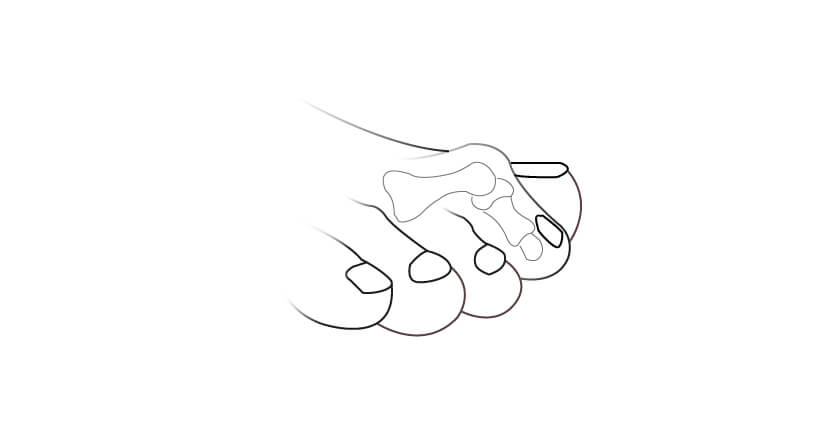
Toe shortening is a surgical procedure that reduces the length of one or more toes. The surgery involves removing the bone or the end joint of the toes to reduce the overall length of the toe and to improve footwear fitting. It is often used for cosmetic purposes also.Long toes can also result in toe deformities in the long-term such as hammer toe or mallet toe deformities which involve a similar procedure.
What is Toe Shortening?
Toe shortening is a procedure to shorten the overall length of the toe by removing bone or the joint within the toe to correct deformity or for aesthetic reasons.What is a Long Toe?
A Morton’s toe is often called a long toe where the second toe is longer. This is a genetic foot type. Often you find that some patients have very long toes that are genetic and do not fit regular shoes and cause corns and calluses as well as deformities.What causes Long Toe and its symptoms
The symptoms are usually caused by poor footwear fitting where the long toe bends in the toes and causes impingement.What are the common reasons for Toe Shortening
Most patients want toe surgery to fit into appropriate footwear whilst others want more cosmetically staircase structure of toe lengths.The Average cost of Toe Shortening Surgery in the UK
We offer a simple fee generator to help illustrate the costs of Toe Shortening Surgery. Please click the below button to launch the quote generator.The price for Toe Surgery can vary, depending on a number of factors, including:- The number of toes that need correcting
- Whether the procedure is for both feet or just one foot
- Whether toe implants are used
- If you are self funding or using private insurance; insurance providers often set the fees.
Preparing for Toe Shortening.
It is prudent to consider risk versus benefit when considering toe shortening surgery. It takes a long time for total recovery and the swelling typically would subside over three to four months’ period and patients would often be counselled regarding the process. The final results may not be evident for 16 weeks or longer in some cases.Toe shortening week-on-week recovery
Toe shortening is performed either with special wires that hold the bones together and I remove after five to six weeks or internal screws. The final outcomes are the same and results would not differ between the two techniques but the postoperative recovery is different.With both procedures you will require two weeks of relative rest with high elevation and no more than 10 minutes an hour of mobilisation. Between weeks two and six if you use wires then you will maintain postoperative shoe as the K-wires protrude out at the end of the toes. However, with screw fixation it may be possible to return to rigid trainers sooner.With K-wires they are removed at six weeks postoperatively. At that point, you can start to do exercise and increase the activities. With screw fixation you will return to shoes quicker but the exercise will still not be allowed for six weeks whilst the toe bones heal.The swelling will continue to subside over a 6 to 16-week period. You may not be able to wear all your smart shoes during that period.Toe Shortening risks and complications
Risks and complications include but not limited to infection, clots, delayed healing, scar irritation, non-union, removal of screw, floating toe, malunion where the toe unites abnormally, complex regional pain syndrome.Toe Shortening: Frequently Asked Questions
It’s called a metatarsal or digital shortening osteotomy. We make a cut in the bone of your toe, remove a section to make it shorter, and hold it in place while it heals.
We make an incision, cut the bone, remove a section to get the length you want, and stabilise it so it heals in the right position. It’s a pretty straightforward way to solve long toe problems.
Unfortunately no—there’s no non-surgical way to permanently shorten a toe. Better shoes and padding can help with discomfort, but surgery is the only permanent fix.
It can be either! Medical reasons include toes that are causing pain, gait problems, or pressure sores. Some people do it purely for appearance, though the NHS might not cover purely cosmetic work.
Toe shortening makes the toe shorter. Hammertoe surgery fixes the bent joint. Sometimes you need both—if you’ve got a long, bent toe.
Initial recovery is 2-3 weeks, weight-bearing over 4-6 weeks, and back to normal at 6-8 weeks.
Yes, it’s safe and works really well when done properly. Most people are very happy with the results and relieved to have better comfort and wear normal shoes again.