Verruca: Diagnosis, Cause and Treatment
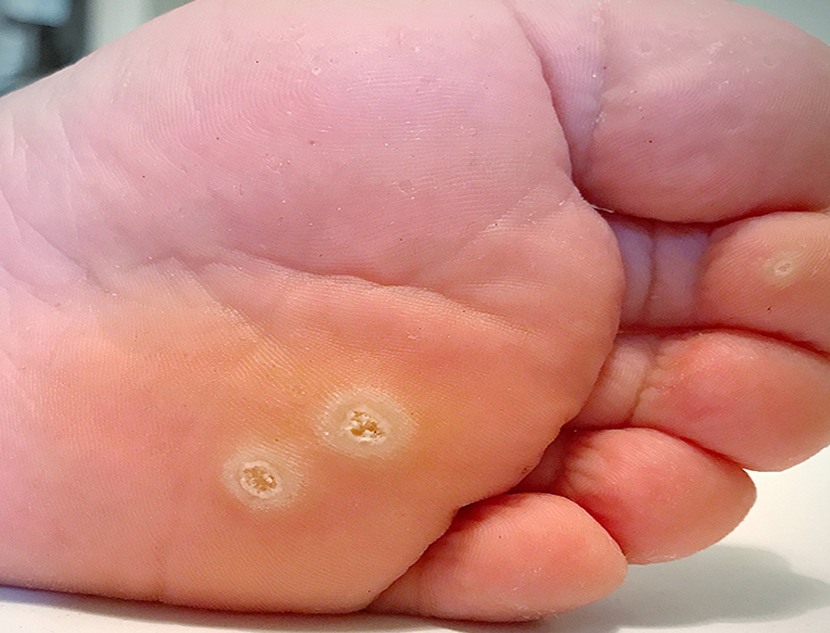
A verruca is a type of wart that grows on the sole of the foot. The wart causes hard skin to form and this can be painful to walk on, often compared to stepping on a needle.
How To Diagnose A Verruca?
Verruca are often recognisable via the following characteristics:
- The skin area of the wart is white
- The wart is often flat, or unraised
- They appear on the soles of the feet
Verrucae may occur either as a single wart or as several warts. Multiple verrucae often form a cluster of small warts around a central larger wart. They can be painful to walk on because the weight of your body forces the verruca to grow inwards.
Verruca With Black Dots
Patients are sometimes worried by small black dots towards the middle of the verrucae. These are small specks of dry blood and quite common.
How Are Verrucas Caused?
Warts are caused by the Human Papilloma Virus (HPV) and verruca are caused by a few strains of this virus family.
Verrucae are infectious and typically passed on by contact with minute specs of infected skin. The virus enters the body through tiny breaks in the skin surface. Due to this, Verrucae are often passed on in public places such as swimming pools. The virus is not particularly contagious, but measures should be taken to prevent passing on the wart to others, such as:
- Wear flip-flops in communal areas, such as locker rooms or around public swimming pools
- Not sharing towels, shoes or socks
How Do Verrucas Form?
Verruca causes the area to overgrow and harden; to form localised thickened skin. Due to friction from walking and footwear, these can be aggravated and painful.
How Deep Do Verrucas Go?
Verruca can typically grow up to half an inch in diameter and can be pushed inwards by the weight of your body as they grow, ending up with several millimeters of wart pressing into the foot.
What Does It Mean When A Verruca Bleeds?
Verrucae can start to bleed, often as a result of rubbing or friction after activity or because of footwear. This can be treated as if it were a cut or graze, by:
- Applying pressure to stop the bleeding
- Make sure the area of bleed is cleaned after it stops
- Apply a plaster to prevent infection or more bleeding
However, if your verruca bleeds frequently or easily it is best to see a specialist for advice.
How To Remove A Verruca
In the long term verrucae will go away by themselves as your body’s immune system fights the underlying virus. However, this can take a considerable amount of time, with half of verrucae still present after two years. Due to this, patients often seek a speedier way of removing the verrucae.
There is no treatment for verruca that is certain to fully resolve the complaint. However, if one treatment fails another can be tried, to increase the chances of success.
Home Remedies
You can buy over-the-counter treatments from your pharmacy, which likely involve gels or ointments containing Salicylic Acid.
Specialist Treatments
In addition to the Home Remedies, there are several more specialised treatments that can be accessed via your GP or a Podiatrist. These include:
- Cryotherapy: The verruca is destroyed by freezing, typically with the use of liquid nitrogen.
- Verruca Needling: Sterile needles are used to puncture the verruca, this stimulates your body’s own immune response to the wart.
- Silver Nitrate: This compound can be used to chemically burn the verruca away.
- Electrocautery: This method also seeks to burn the verruca away, by using electrically heated needles.
- Surgery: This involves removing the verruca with surgery. This is not recommended as a standard therapy as it can be painful, disruptive to activities and cause scarring.
How Do You Know When A Verruca Is Dying?
This is generally hard to tell. If you are actively treating the verruca, as it dies it changes colour; the verruca turns black when the blood supply has been cut off.
FAQs
Viruses cause warts and verrucas, which can be transferred from contaminated surfaces
or through close skin contact. Damp or injured skin increases the risk of spreading.
After exposure, a verruca may take several months to develop.
In the early stages, a verruca may look like a tiny dark puncture mark.
As it develops, it may turn grey or brown, become bumpy like a cauliflower,
and sometimes show a dark central spot caused by bleeding.
Treatment commonly involves applying salicylic acid to soften the hard outer layer
of the verruca. This may come as a cream, gel, or medicated plaster.
Signs that suggest a verruca include:
- Firm and rough texture
- Usually skin-coloured but may appear darker on darker skin
- Typically appears on the feet
- Some are round, flat, and yellow (plane verruca)
- Clusters spreading over skin (mosaic verruca)
Many verrucas resolve on their own over time without causing further problems,
although pain or discomfort may still be experienced.
Find Out More
If you have any other questions or would like to reserve an appointment at our practice, don’t hesitate to get in touch with our team: