Short Toe Surgery
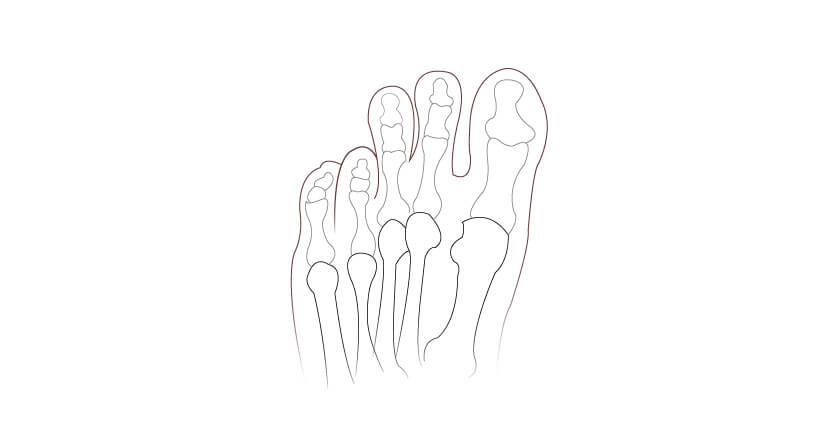
If surgery is advised to lengthen your metatarsal (and realign toe position), your specialist will initially carry out an X-ray to assess which surgery is most appropriate for you.
Frequently Asked Questions
Brachymetatarsia is a short metatarsal affecting the feet. It can involve one or more metatarsals, most commonly the fourth metatarsal, resulting in a short or elevated fourth toe. It appears to affect women more frequently than men.
The cause of brachymetatarsia is poorly understood. It occurs when metatarsal growth becomes stunted. It is often seen in family members, suggesting a possible genetic link, though injury has also been suggested as a contributing factor.
Brachymetatarsia can only be corrected through surgical lengthening procedures of the metatarsal using various available techniques.
Patients often experience shoe irritation and discomfort. Many feel embarrassed by the appearance of the toe, leading to psychological distress and avoidance of exposing their feet in public. The impact can be both physical and emotional.
Non-surgical treatment includes wearing deep and roomy shoes. Surgical options include single-stage lengthening using bone grafts and fixation plates, or gradual lengthening using an external fixator over several weeks until healing is confirmed.
It is not possible to fix brachymetatarsia or lengthen the bone without surgery.
Recovery depends on the procedure. Single-stage lengthening typically involves 5–6 weeks in a cast followed by a walking boot, with return to trainers around 10 weeks. Swelling can persist for up to a year. External fixation requires longer immobilisation and complete healing may also take up to one year.
Walking is not allowed for the first six weeks after surgery. After this period, gradual weight bearing may begin in a protective boot.
There is ongoing debate. It may result from abnormal skeletal growth or genetic predisposition.
Package prices range between £7,000 and £10,000 per foot. Only one foot can be operated on at a time due to postoperative immobilisation requirements.