When Should You Consider Tailor’s Bunion Surgery?
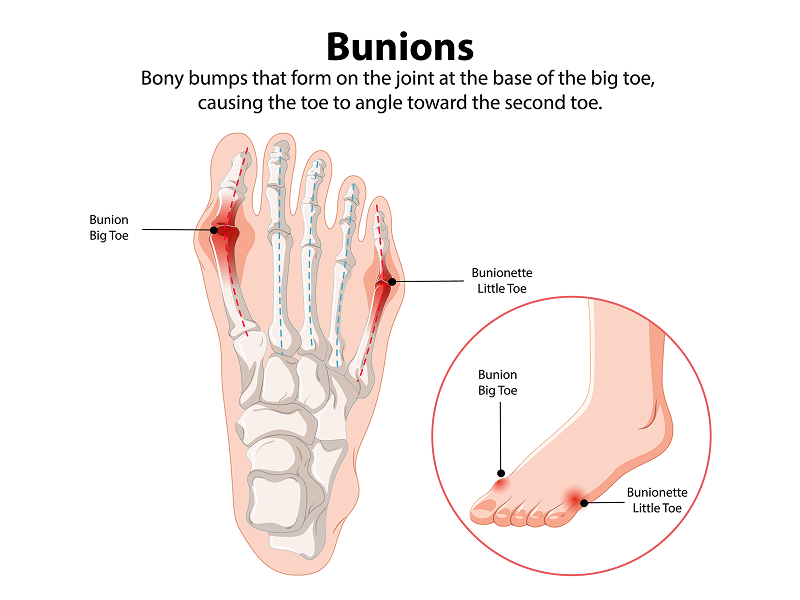
What is a Tailor’s Bunion?
A Taylor’s bunionette, also known as a bunionette deformity, is a bunion on the opposite side of the foot, i.e. around the fifth metatarsal head. It is a congenital condition which is either due to spreading of the fourth and fifth metatarsal, or bowing of the fifth metatarsal, which causes prominence and pain on the outside of the foot and footwear difficulty.
When Conservative Treatments Are No Longer Enough?
Patients can try using wider footwear or orthotics to support the foot so that there is less splaying of the forefoot. You can use bunion pads, or sometimes if there is a bursitis, an anti-inflammatory injection of steroid to reduce some of the inflammation. However, this may not prove enough, and in those cases, the next stage may well be surgical correction.
6 Signs You Should Consider Tailor’s Bunion Surgery
The six signs that suggest you need Taylor’s bunion surgery include:
- Redness over the fifth metatarsal head
- Pain on palpation of the area
- Footwear fitting problems
- Ulcer or corn developed over the fifth metatarsal head
- Difficulty in wearing shoes
- Progressive deformity causing general forefoot symptoms around the fourth toe
What Happens if You Delay Surgery?
Taylor’s bunion surgery is an elective operation, but delaying an operation could result in generalised forefoot deformity and pain, and progression of deformity resulting in pain and discomfort.
Taylor’s Bunion Surgery: What to Expect?
The goals of bunion surgery are to correct the deformity and improve footwear fitting. It realigns the fifth metatarsal.
Surgical Techniques Used
Mr. Nazir specialises in keyhole Taylor’s bunionette surgery. Two 2 mm incisions are made to correct the deformity, and a screw is used to hold the deformity in place. This allows for excellent correction of deformity without requiring an open incision, which carries greater complications.
Risk and Recovery Considerations
Generally, in the first two weeks, patients would often have careful immobilisation in a post-op shoe. They can then transition to trainers. However, high-impact activities will not be allowed for six to eight weeks, and swelling may take a couple of months to settle.
Success Rates and Outcomes
More than 95% success rates are reported with keyhole bunion surgery. Recurrence rates are rare. There are small risks of infection, bone healing problems, and screw removal.
When to See a Foot and Ankle Specialist?
If you have pain that is persisting or a deformity that is progressing, it is important to see a specialist to look at treatment options.
Book An Appointment

Frequently Asked Questions
- When is surgery recommended for Taylor’s bunion?
A painful Taylor’s bunion is indicated for surgery, or if there are footwear fitting problems. - Is Taylor’s bunion surgery painful?
With modern techniques, you have minimal pain for no more than one to two days post-operatively. - How long does it take to recover from Taylor’s bunion surgery?
Initial recovery is two to four weeks, but bone healing will take six to eight weeks. There may be some swelling that persists for three months. - Can Taylor’s bunion come back after surgery?
Recurrence rates are less than 2%. - Are there risks associated with Taylor’s bunion surgery?
Yes. The risks include infection, clots, delayed bleeding, prolonged swelling, screw removal, fracture, and recurrence, but all of these are rare.